Header image: Solvisi / GLBzi (glbzi.com) — all rights belong to Solvisi.
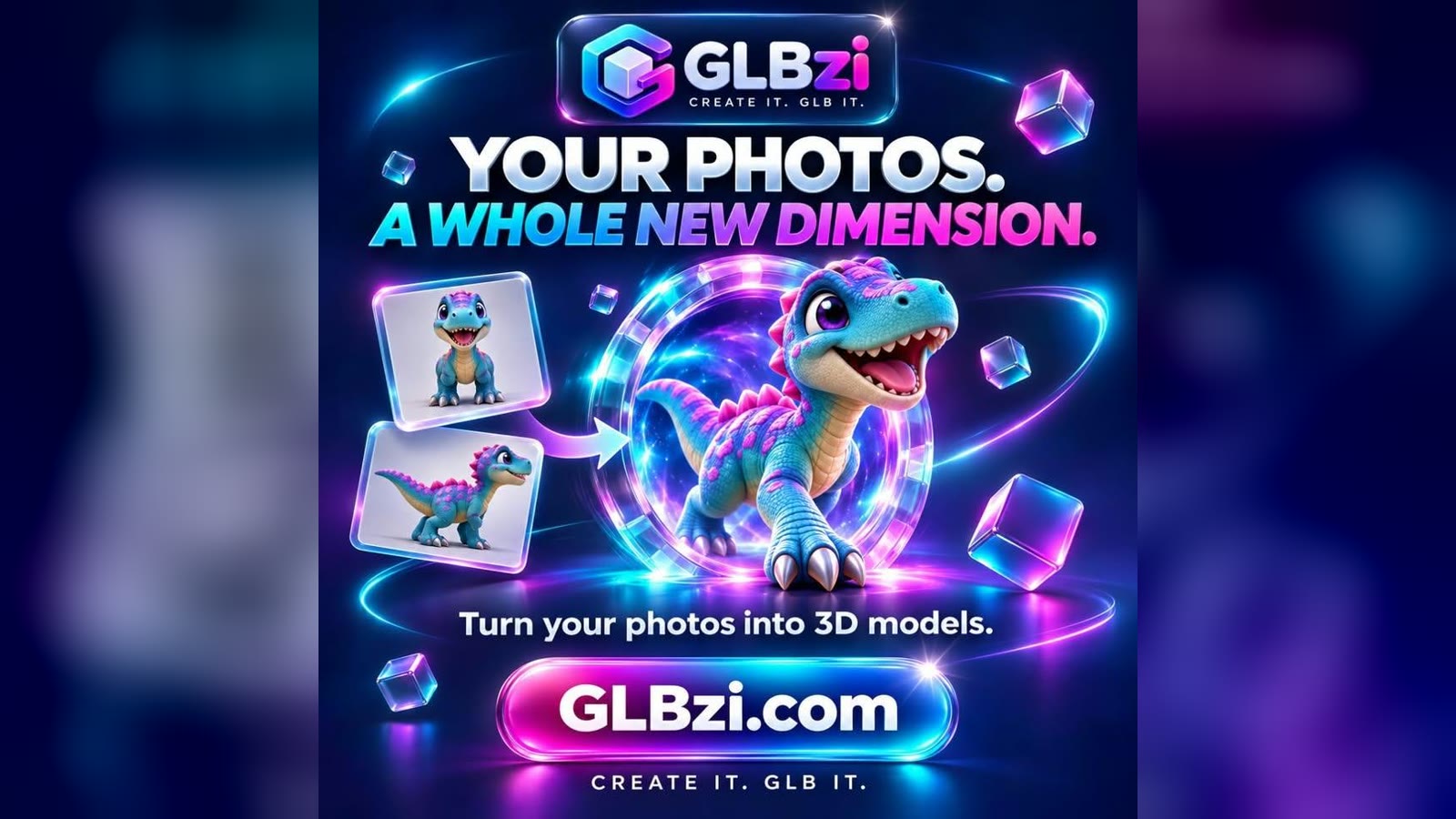
Every so often a small studio posts a graphic that stops your thumb mid-scroll. A glowing baby dinosaur steps out of a portal, two flat photos hang beside it, and a single line promises "Your photos. A whole new dimension." That poster comes from Solvisi, the creative studio of designer Jodie Jewell in Bel Air, Maryland, and it announces her 3D product GLBzi.
We are not affiliated with Solvisi. We just think the work is a masterclass in launch visuals, and every creator who posts about their own product can learn from it. Here is what the studio does well, and how to borrow it.
Who is behind the work
Solvisi describes itself as "a small studio for big 'what ifs.'" Its homepage opens with "Your vision. Beautifully unexpected." and the promise "You bring the 'what if.' I bring the imagination." The studio builds websites, social graphics and reels, NFC and QR experiences, digital magazines and 3D web experiences, and it runs a growing family of its own products. Its process fits in three words: Share, Shape, Create.
Lesson 1: Lead with one bold promise
The GLBzi poster says one thing: your photos become 3D. No feature list, no price grid. The headline does the selling and the small line underneath, "Turn your photos into 3D models.", does the explaining. On a feed where people give a post about a second, one clear promise beats five clever ones.
Try it: write your post's headline before you design anything. If it needs a comma to make sense, it is two posts.
Lesson 2: Make the product the hero, and show the change
The poster does not describe the product; it shows the before and after. Two flat photos on the left, a living 3D character on the right, an arrow and a portal in between. GLBzi's own site does the same with a chair: a few photos of a real chair turning into a model. Viewers understand the transformation before they read a word.
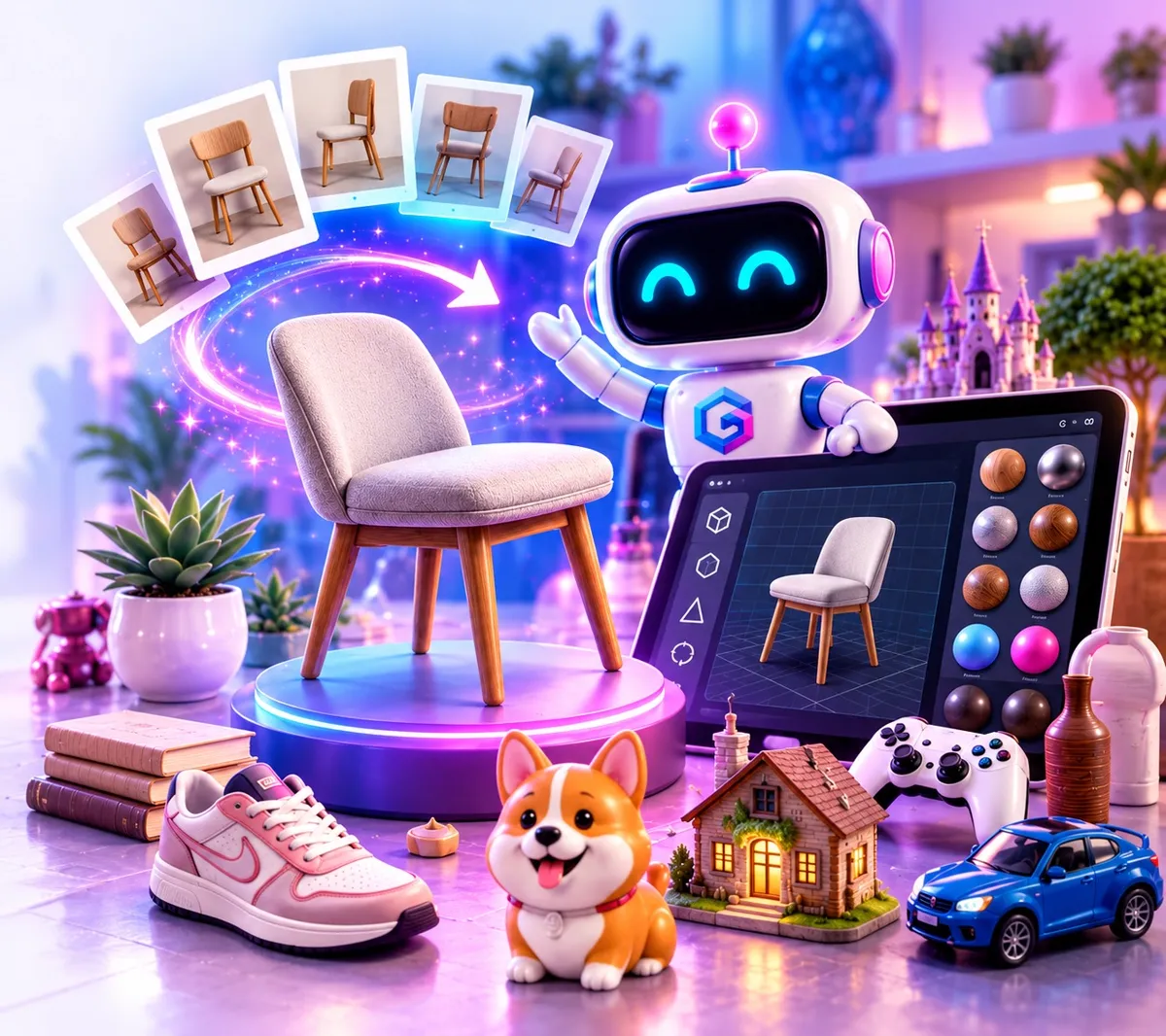
For accuracy: GLBzi's browser 3D Workshop is live today for building, editing, importing and exporting GLB files, and its photo-to-3D feature, which uses four photos (front, back, left and right), is marked as coming soon on the site.
Lesson 3: Give every product the same family look
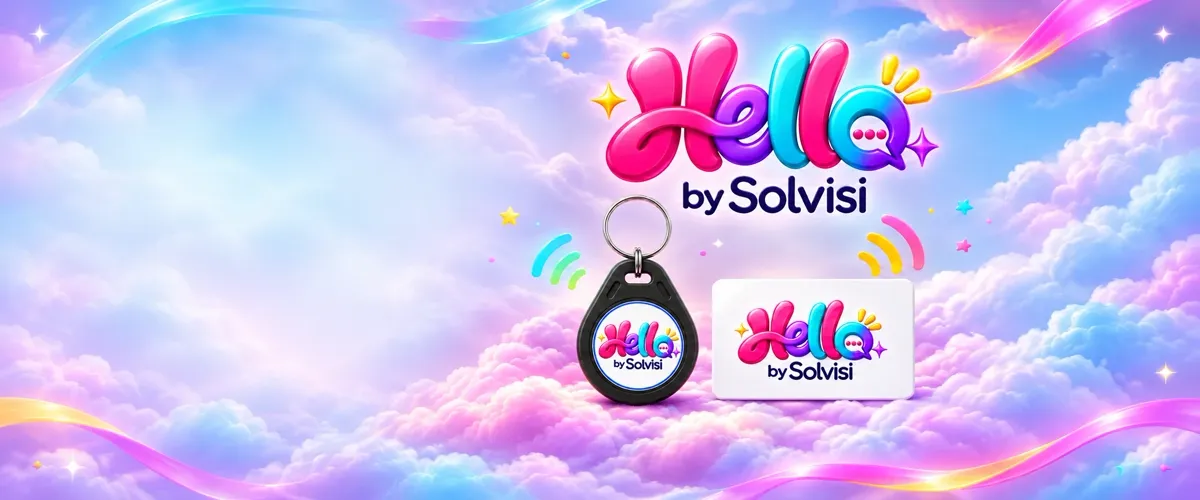
Line up Solvisi's products and you can tell they belong together: glossy glass shapes, pink-to-violet light, friendly rounded lettering. Hello by Solvisi (NFC key fobs and cards, "One little tap. A whole lot of you."), Roamzi (3D and VR rooms, "Your imagination has a place to go."), Folio (PDFs turned into page-turning magazines) and GLBzi each have their own logo, yet the glow ties them together. A follower who likes one post recognises the next.
Try it: pick two colors, one type style and one recurring shape, and use them on every post for a season. Consistency is what turns posts into a brand.
Lesson 4: Show the place, not the feature list
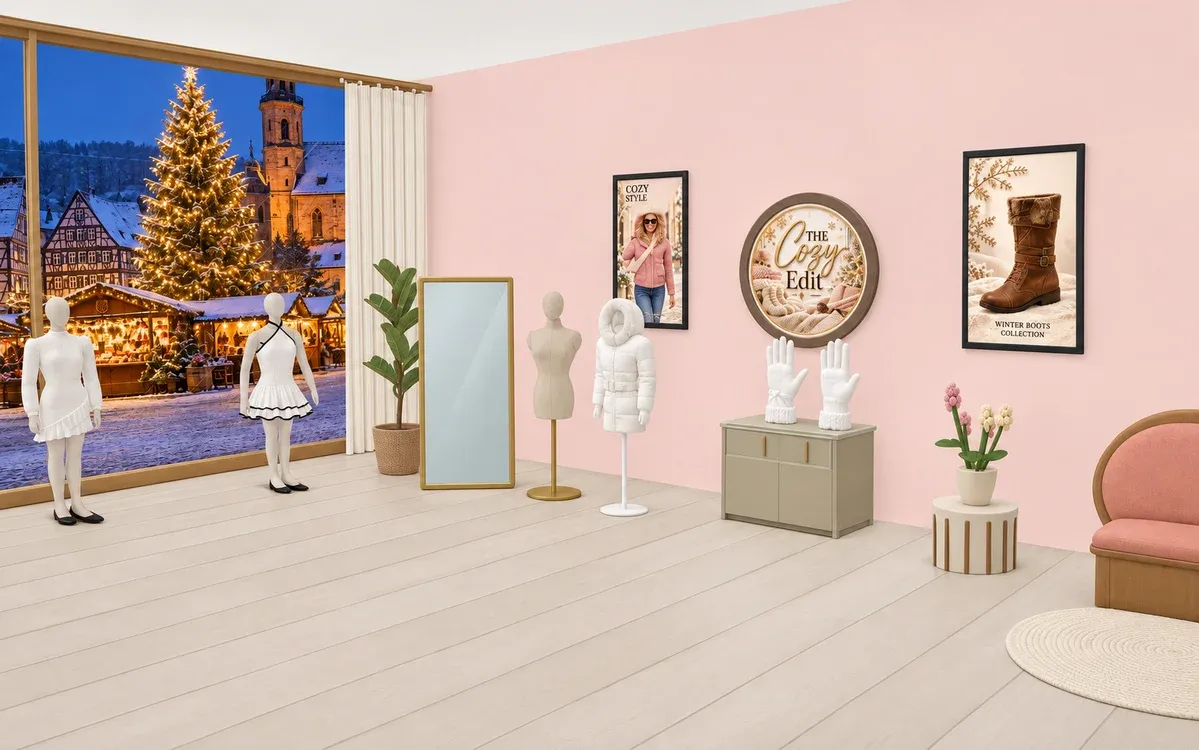
Roamzi sells rooms you can walk into from a phone, a computer or a VR headset, shared by link, QR code or website embed. Instead of listing tools, its showcase images drop you straight into a finished boutique or wellness space with a view out the window. Your audience imagines themselves there, which is exactly what a good product post should do.
Lesson 5: Let the web address be the button
The bottom of the GLBzi poster is a glowing pill that reads GLBzi.com. No "link in bio" hunt, no QR code to squint at. When a graphic is screenshotted, reposted or seen on a TV, the address survives. Put your URL inside the art, large and readable, especially on platforms where captions get cut off.
Lesson 6: Bookend with a short tagline
"Create it. GLB it." sits under the logo at the top of the poster and again under the button at the bottom. Saying the tagline twice frames the whole graphic and makes it stick. Four words, a rhythm, and a made-up verb people will repeat.
Lesson 7: Keep a real human in the voice
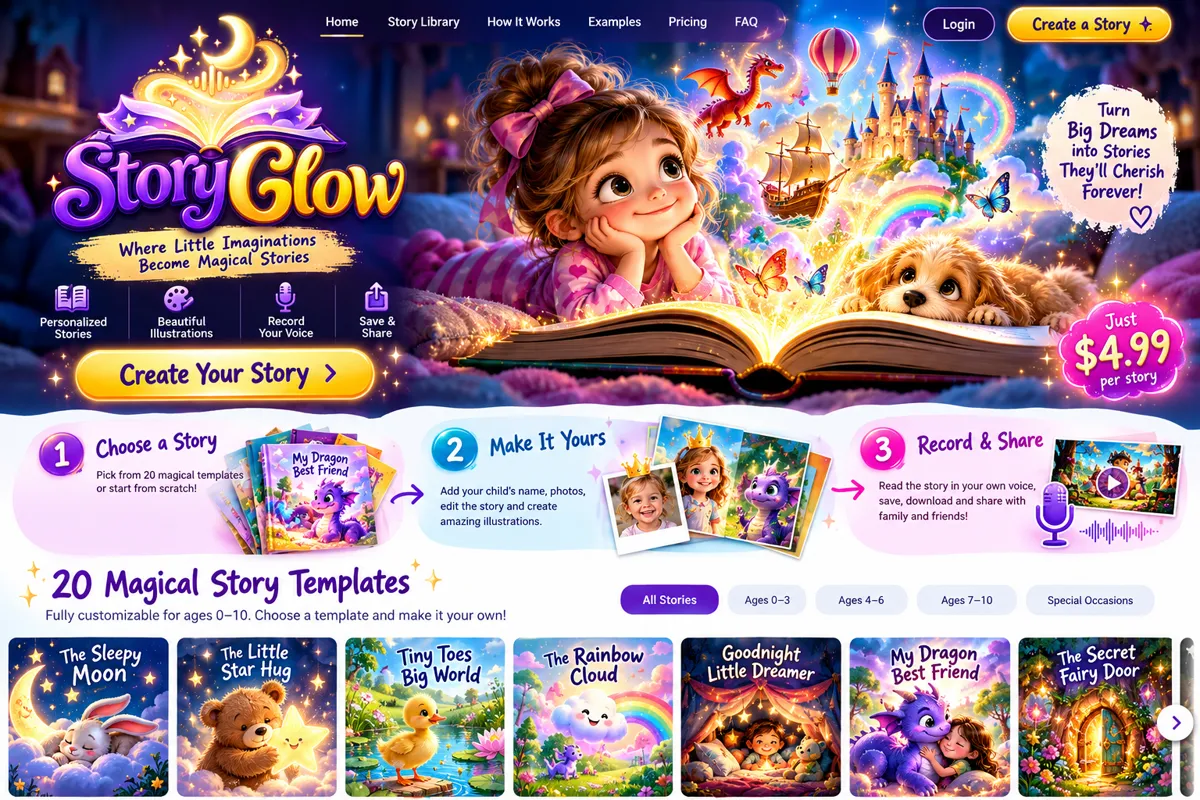
Solvisi's copy says "Big imagination. Real human." and it reads that way. The same warmth shows up in StoryGlow, a Solvisi-listed product that turns a child's name, an optional photo and a family member's recorded voice into a personalized storybook ("Personalized storybooks with a familiar voice"). Even playful products earn trust when the words sound like a person, not a press release.
The rest of the family
Solvisi's portfolio also lists TapAble, NFC and QR fobs that connect helpers with information a parent chooses to share, and SnapShot, a QR photo booth for events. Different audiences, same imaginative style.
Bring it back to your own feed
You do not need a 3D dinosaur to use these ideas. Before your next launch post, check five things: one promise, the product shown changing something, your family look, your URL inside the art, and a tagline you can say twice. Then post it on a steady schedule so people see it more than once. If you plan your posts in PostPilot, line up the launch graphic, a behind-the-scenes reel and a reminder post across the week instead of one lonely announcement.
To see the originals, visit solvisi.com and glbzi.com.
Related reading: a profile of Solvisi in the Smith App Studio Journal, and how GLBzi turns everyday photos into portable 3D on Nexaria.